
Promotional Grocery Bags: The Complete Guide for Australian Businesses and Organisations
Discover how promotional grocery bags can boost brand visibility, support sustainability goals, and deliver real ROI for Australian businesses and events.

Written by
Charlie Kim
Bags & Totes
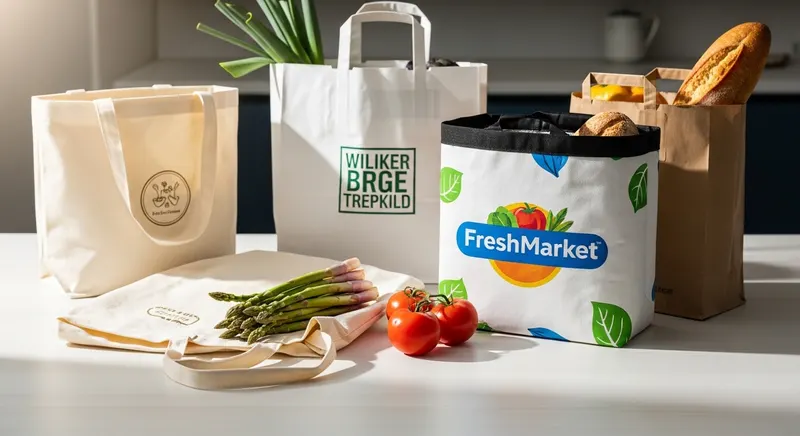
Promotional grocery bags are one of the most effective branded merchandise tools available to Australian organisations today — and it’s easy to understand why. Every time a customer, client, or event attendee carries your branded bag through a supermarket, farmers market, or shopping strip, your logo goes with them. That’s repeated, passive brand exposure without any ongoing cost. In a market where businesses are increasingly competing for attention, a well-designed promotional grocery bag does the heavy lifting long after the initial handout. Whether you’re a Sydney retail brand building customer loyalty, a Brisbane charity hosting a fundraising drive, or a Melbourne council distributing eco-friendly awareness packs, there’s a grocery bag solution suited to your needs, your budget, and your brand.
Why Promotional Grocery Bags Remain a Powerful Branding Tool
It might seem like a simple product, but the grocery bag punches well above its weight in terms of marketing value. Unlike a flyer that gets thrown away or a digital ad that disappears after a scroll, a branded grocery bag is functional. People use it. Repeatedly.
Research consistently shows that reusable bags are among the highest-retained promotional items, with many lasting several years in regular use. In Australia, where single-use plastic bag bans have been rolled out across every state and territory, the demand for reusable alternatives has never been stronger. This creates a perfect opportunity for brands to fill that gap with something useful and branded.
For organisations focused on reducing their environmental footprint, promotional grocery bags also align neatly with sustainable promo products initiatives — allowing you to meet your CSR goals while generating brand impressions simultaneously.
The Frequency Factor
One of the strongest arguments for promotional grocery bags is frequency of use. Australians grocery shop multiple times per week on average. That means a single branded bag could generate dozens of impressions per month — in carparks, checkout queues, markets, and public transport. This kind of organic, real-world visibility is difficult to replicate with most other promotional items.
Types of Promotional Grocery Bags Available in Australia
Understanding the different bag types is the first step in making a smart purchasing decision. Each style has its strengths depending on your audience, use case, and decoration requirements.
Non-Woven Polypropylene Bags
This is the classic reusable supermarket bag. Lightweight, affordable, and available in an enormous range of colours, non-woven PP bags are ideal for high-volume campaigns where budget is a primary consideration. They work exceptionally well for trade shows, expos, and large-scale community events.
Minimum order quantities for non-woven bags typically start from around 100–250 units depending on the supplier, and the unit cost drops significantly at higher volumes — making them a favourite for organisations ordering 500+ pieces. The decoration method of choice for these bags is generally screen printing, which delivers vibrant, full-colour results at a low per-unit cost. If you’re based in Queensland and looking to manage the production process locally, screen printing services in Brisbane are readily available for bag decorating at scale.
Cotton and Canvas Tote Bags
Cotton tote bags have a premium, tactile quality that non-woven bags simply can’t match. They’re heavier, more durable, and increasingly fashionable — making them suitable for retail brands, universities, boutique events, and lifestyle campaigns.
Canvas totes are particularly popular in urban markets like Melbourne’s laneway retail precinct or Adelaide’s Central Market precinct, where shoppers associate them with quality and sustainability. For these bags, embroidery delivers an elevated finish for smaller logo placements, while screen printing is excellent for bold, large-format artwork.
Jute and Hessian Bags
Jute bags carry an inherently eco-friendly aesthetic that resonates strongly with environmentally conscious audiences. They’re biodegradable, sturdy, and visually distinctive. Charities, organic food brands, and sustainability-focused businesses often gravitate toward jute options. These bags pair beautifully with other sustainable promo products in a gift set or event pack.
Insulated Cooler Bags and Grocery Totes
For brands targeting a more premium audience, insulated grocery bags add a layer of practicality that standard totes can’t match. These are particularly effective for food and beverage companies, health brands, or corporate gifting scenarios where you want to make a lasting impression. They’re also well-suited to summer branded merchandise campaigns in Australia, especially for outdoor events, barbecues, and corporate picnics.
Waterproof and Heavy-Duty Options
For clients in trades, agriculture, outdoor recreation, or coastal markets, a more robust, waterproof bag may be more appropriate than a standard grocery tote. Some heavy-duty options feature reinforced stitching, zip closures, and water-resistant coatings — making them suitable for markets, camping trips, or wet environments.
Decoration Methods for Promotional Grocery Bags
Getting your branding right on a grocery bag is essential. Poor quality printing or embroidery will undermine the perceived value of your giveaway — and by extension, your brand.
Screen Printing
Screen printing is the go-to method for large runs of non-woven and cotton bags. It delivers sharp, vivid results across large surface areas, and the cost per unit decreases significantly with volume. It’s best suited to designs with limited colour counts (1–4 colours), though full-colour options are available. Setup fees typically apply per colour, so simpler artwork saves money at lower volumes.
Embroidery
Embroidery adds texture, depth, and perceived quality. It’s most effective for cotton canvas bags where you want a professional, premium feel. It works best for logos and wordmarks rather than complex photographic images. Turnaround can be slightly longer than screen printing due to the digitising process, so build this into your project timeline.
Heat Transfer and Digital Printing
For smaller runs or artwork with photographic complexity, digital heat transfer is a flexible option. It allows for full-colour, high-resolution decoration without screen setup fees — making it cost-effective for orders under 100 units or for personalised runs.
Sublimation
Sublimation is excellent for synthetic fabric bags where you want full-bleed, all-over coverage. The colour saturation is outstanding, and it’s a great option for creative campaigns where the bag itself becomes a bold visual statement.
Budgeting for Your Promotional Grocery Bag Order
Budget planning is one of the most common challenges organisations face when ordering branded merchandise. Here’s a practical framework to help you get it right.
Unit cost vs total investment: Non-woven polypropylene bags can be sourced from around $1.50–$4.00 per unit at medium volumes. Cotton totes sit higher, typically $4.00–$9.00 depending on weight and decoration. Jute bags and insulated cooler bags range from $6.00–$18.00+ per unit. Always factor in setup fees (usually $30–$80 per colour for screen printing) when calculating your true cost.
Volume discounts: Most suppliers offer tiered pricing, with noticeable savings between 100 and 250 units, and again between 500 and 1,000 units. If your budget allows, ordering at a higher tier is often better value even if you store the surplus.
Turnaround times: Standard lead times for promotional grocery bags typically range from 10–15 business days after artwork approval. Rush options are available but attract premium pricing. If you’re working toward a conference, product launch, or seasonal campaign, order earlier than you think you need to.
Sample ordering: Always request a physical sample or a digital proof before approving a full run. Colour matching, logo placement, and fabric quality are far easier to assess in person than on a screen.
Practical Applications: Who Uses Promotional Grocery Bags?
The versatility of promotional grocery bags makes them suitable for an enormous range of sectors and occasions.
- Retail and hospitality businesses use branded bags as packaging alternatives that customers are happy to reuse, keeping the brand visible beyond the purchase moment.
- Supermarkets and food brands distribute them at product launches, activations, or as rewards for loyalty programme members.
- Schools and universities hand them out at orientation days, fetes, and open days — often filled with information packs, stationery, and other branded items like custom tee shirts or sport water bottles.
- Government and councils in cities like Canberra, Perth, and Darwin use them in community awareness campaigns, particularly around waste reduction, health initiatives, or local events.
- Charities and not-for-profits incorporate branded grocery bags into fundraising merchandise ranges or donation gift sets. Combined with other items like travel coffee cups or custom lanyards, they make compelling supporter packages.
- Trade shows and conferences frequently use grocery bags as delegate satchels — practical, visible, and easy to fill with collateral, USB promotional drives, and travel mugs.
- Events and festivals distribute them as merchandise items that attendees genuinely want to keep and use.
Tips for Designing an Effective Promotional Grocery Bag
Good design transforms a functional bag into a brand asset. Keep these principles in mind when briefing your artwork:
- Keep it simple and bold. Grocery bags are viewed from a distance, often while moving. A clean logo, clear wordmark, or strong single image will always outperform cluttered, text-heavy designs.
- Choose colours strategically. PMS colour matching ensures consistency with your brand guidelines, but also consider how your chosen colour will read on the bag material itself.
- Think about placement. A centred logo on the main panel is classic, but consider secondary placement on handles or the base panel for added interest.
- Include a call to action or website URL if the bag is being used as part of a wider campaign. One line of text under your logo is often enough.
Conclusion: Key Takeaways for Ordering Promotional Grocery Bags
Promotional grocery bags are a practical, cost-effective, and highly visible marketing tool for Australian businesses and organisations of all sizes. Whether you’re planning a large-scale community campaign or a boutique corporate gifting initiative, there’s a bag type, material, and decoration method that will suit your brief and your budget.
Here are the key points to remember:
- Choose your material based on your audience and use case — non-woven PP for volume and budget, cotton and canvas for premium feel, jute for eco-focused messaging, and insulated options for food or seasonal campaigns.
- Match your decoration method to your design — screen printing for bold, high-volume runs; embroidery for quality; digital printing for complex artwork or small orders.
- Plan your timeline carefully — standard lead times are 10–15 business days after proof approval, so build in buffer time for large or important campaigns.
- Factor in all costs — unit cost, setup fees, freight, and samples should all be accounted for in your total budget.
- Think beyond the bag itself — promotional grocery bags work best when they’re part of a cohesive merchandise strategy, paired with complementary items that reinforce your brand message and delight your audience.
With the right brief, a well-sourced promotional grocery bag can become one of the most enduring and effective brand tools in your marketing arsenal.